

Scientists Looked Inside the Spinal Fluid of ME/CFS Patients. Those With PoTS Showed Something Different.
A 2026 study looked directly into the cerebrospinal fluid of ME/CFS patients and found proteins linked to Alzheimer’s, blood clotting and immune activation. Here is what that actually means.

Today let’s decode a study that went somewhere most ME/CFS research has not. Not blood. Not muscle tissue. Not brain scans. Cerebrospinal fluid (CSF), the fluid that surrounds and cushions your brain and spinal cord. What was found raises questions about the nature of this condition.
What is cerebrospinal fluid and why does it matter
Cerebrospinal fluid, or CSF, is produced continuously by the brain, circulates around the brain and spinal cord, and drains back into the bloodstream. It carries nutrients, removes waste products, and provides a window into what is happening in the central nervous system in a way that blood tests simply cannot. Changes in CSF protein levels are used to diagnose conditions like multiple sclerosis, meningitis, Alzheimer’s disease, and Guillain-Barré syndrome.
ME/CFS strongly involves the central nervous system. Cognitive impairment, autonomic dysfunction, neuroinflammation and brain inflammation are core features of the condition. The question this study asked was: if we look directly into the fluid surrounding the brain and spinal cord of people with ME/CFS, what do we actually find?
What the study did
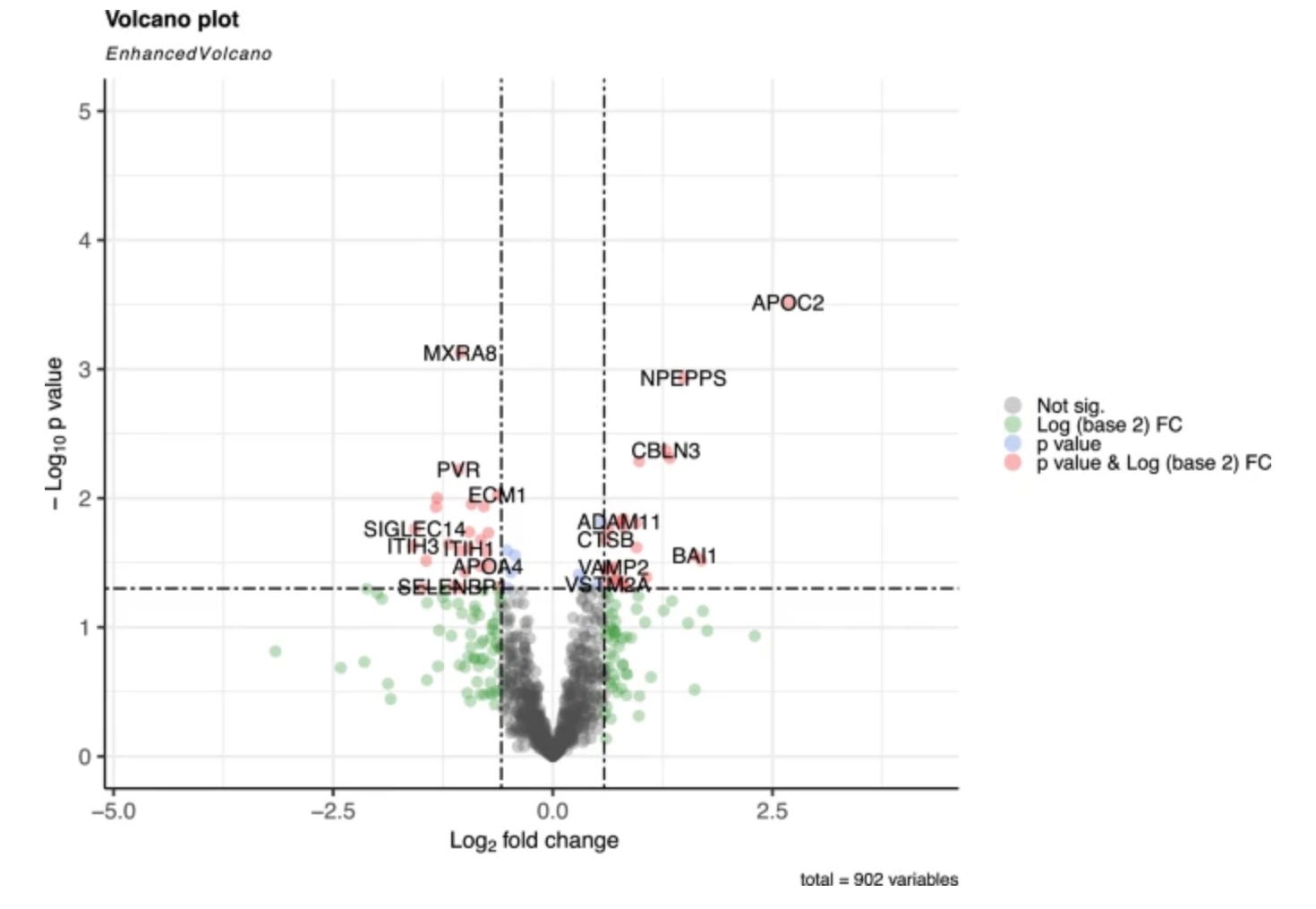
Researchers led by Dr Jonas Bergquist at Uppsala University in Sweden, in collaboration with Dr Wenzhong Xiao at Harvard Medical School, analysed CSF samples from 31 people diagnosed with ME/CFS. They identified and quantified 902 proteins in the fluid and then looked for patterns associated with two things: disease severity (mild, moderate, severe) and whether patients also had PoTS.
This is a genuinely sophisticated piece of work. Rather than looking for one or two specific proteins, they mapped the full protein landscape of the CSF and then asked which biological pathways were being activated or suppressed depending on how sick someone was and whether their autonomic nervous system was also involved.
What they found in PoTS patients
In ME/CFS patients who also had PoTS, two pathways were significantly enriched compared to those without PoTS: neutrophil degranulation and platelet activation.
Neutrophils are the most abundant white blood cells in the body, the first responders of the immune system. When they degranulate, they release a burst of inflammatory chemicals designed to destroy pathogens. Finding enriched neutrophil degranulation pathways in the CSF suggests an active inflammatory response happening in or around the central nervous system specifically in the subgroup of ME/CFS patients who also have autonomic dysfunction.
Platelet activation is part of the blood clotting cascade. Activated platelets aggregate and promote clot formation. In the CSF context, enriched platelet activation pathways suggest a prothrombotic, or clot-promoting, environment in the fluid surrounding the brain. This fits with the emerging microclotting hypothesis in Long COVID and ME/CFS, where tiny clots in the microvasculature are thought to impede blood flow and nutrient delivery to tissues including brain tissue.
What they found in severe cases
In patients with the most severe ME/CFS, several additional pathways were enriched that are worth unpacking carefully because some of the language here is alarming and deserves context.
The complement cascade was enriched in severe cases. The complement system is part of the innate immune system that enhances the ability of antibodies and phagocytic cells to clear pathogens. When it is activated chronically in the wrong context it can cause significant tissue damage. Complement dysregulation has been found in Long COVID, Alzheimer’s disease, and several autoimmune conditions.
Coagulation-related pathways were also enriched, specifically the formation of fibrin clot pathways. This again points toward a prothrombotic environment in the CSF of the most severely affected patients.
Then there is the Alzheimer’s related finding. The study found enrichment of Alzheimer’s disease related neuronal degeneration markers in severe ME/CFS CSF. This needs to be stated with precision: this does not mean ME/CFS patients are developing or will develop Alzheimer’s disease. What it means is that proteins associated with the neurodegenerative processes seen in Alzheimer’s disease, proteins involved in neuronal damage, protein misfolding, and inflammatory neurodegeneration, appear to be elevated in the spinal fluid of people with the most severe ME/CFS presentations.
This is a finding that demands replication and much more investigation before any clinical conclusions can be drawn.
Why this is significant for the broader picture
Previous work by Bergquist’s group found that approximately 8 in 10 ME/CFS patients have abnormalities in craniocervical structures, the junction between the skull and the top of the spine. These abnormalities can increase CSF pressure and impair its flow, potentially concentrating inflammatory proteins in the fluid rather than allowing them to drain normally. This study’s findings fit into that framework: if CSF flow is impaired and inflammatory processes are active, proteins associated with immune activation, coagulation and neurodegeneration would accumulate.
The fact that different protein signatures are associated with PoTS status versus severity also supports the idea that ME/CFS is not one condition but a cluster of overlapping pathophysiological processes, exactly the kind of mechanistic heterogeneity that makes both diagnosis and treatment so difficult.
What this study cannot tell us
Thirty-one patients is a very small sample. The findings are hypothesis-generating rather than definitive. There is no healthy control group in this study, which means we cannot confirm that these protein patterns are absent in healthy people or present only in ME/CFS rather than in other neurological conditions. The cross-sectional design means we do not know whether these protein changes cause symptoms or are a consequence of them. And CSF sampling via lumbar puncture is invasive, which makes large-scale replication studies difficult to run.
None of this diminishes the importance of the findings. It contextualises them.
The take home message
Something measurable, specific, and biologically meaningful is happening in the cerebrospinal fluid of ME/CFS patients. The protein signatures differ depending on severity and on whether autonomic dysfunction is also present. The pathways implicated, immune activation, coagulation, neurodegeneration, are not the pathways of a psychosomatic condition. They are the pathways of a biological disease affecting the central nervous system.
For a condition that has spent decades being dismissed as psychological, each study that finds objective, measurable, central nervous system involvement is not just scientifically interesting. It is politically and clinically necessary.
The views and opinions expressed in Dysautonomia Decoded are my own and do not represent those of my employer or any affiliated organisation.
References
Bergquist J, Xiao W, et al. Proteomic signatures in cerebrospinal fluid and their clinical associations in patients with ME/CFS. Scientific Reports. 2026. https://doi.org/10.1038/s41598-026-46965-1
Tronstad K, et al. Widespread differences in circulating blood proteins in ME/CFS. University of Bergen. 2026.
Cervia-Hasler C, et al. Persistent complement dysregulation with signs of thromboinflammation in active Long COVID. Science. 2024;383:eadg7942.
Great piece. You have a tendency to reference POTS without clarifying whether the specificity is intentional or not. I don't have POTS. Indeed my symptoms are nearly opposite in nature but I do have dysautonomia. But as you point out relative to the problems with the breadth of the term ME/CFS, while the breadth is much narrower, the same issues apply to dysautonomia.
All the same, thanks for all your efforts. This makes me want to get my CSF tested but then what action could be taken? This seems to be the case with most of this research, we learn all sorts of new things but they don't get us anywhere.
Oh the complexities of the human body, and then there are the folks who believe this all just happened out of thin air.