


Today let’s decode what we actually know about who gets Long COVID and why. This is not a list of risk factors that ends with “more research is needed.” The evidence has matured enough that specific, biologically coherent answers are beginning to emerge. Some of them will challenge assumptions you may have about this condition. Some of them are directly relevant to people who have already had COVID-19 and are wondering whether a future infection puts them at risk.
The scale of the question
Before getting into who is at risk, the numbers are worth stating clearly. Global Long COVID prevalence was estimated at 29% of non-hospitalised confirmed COVID-19 cases in a meta-analysis of 144 studies. In large US electronic health record datasets covering 3.4 and 1.9 million adults respectively, Long COVID risk did not decrease over time, with the highest risk recorded in 2024 compared to 2021. Between 5.3% and 7.6% of the US adult population has been living with Long COVID at any given point from 2022 to 2024.
This is not a condition that affects a small minority of people who had unusually severe acute illness. It affects a substantial proportion of people who had mild infections and felt well enough to continue working throughout. Understanding who is most at risk matters.
Female sex
The single most consistently replicated risk factor across the Long COVID literature is female sex. Study after study, in different countries, using different methodologies, finds that women are significantly more likely to develop Long COVID than men. A prospective US study found female sex among the strongest independent predictors of Long COVID at six months after infection. A large UK Household Longitudinal Study of 12,033 adults found distinct sex-specific patterns in risk, with female sex remaining independently associated with disabling Long COVID after adjustment for a wide range of other variables.
The biological reasons are not fully established but several plausible mechanisms exist. Women have more robust immune responses than men in general, which produces better short-term defence against infection but also makes immune dysregulation more likely. Oestrogen modulates mast cell activation, which we have decoded in previous pieces as a key mechanism in the PoTS/EDS/MCAS cluster that overlaps significantly with Long COVID. The hormonal environment across the menstrual cycle affects autonomic regulation, inflammatory signalling and vascular tone in ways that may increase vulnerability to post-viral dysregulation. The sex disparity in Long COVID is not yet fully explained, but it is not coincidental.
Pre-existing autoimmune disease
A study published in the International Journal of Infectious Diseases in June 2026 by Malakooti and colleagues at Case Western Reserve University specifically examined the relationship between pre-existing autoimmune disease and Long COVID risk. The finding was unambiguous: pre-existing autoimmune disease was independently associated with heightened Long COVID risk. The highest risk was in patients with primary autoantibody-associated autoimmune conditions, meaning conditions driven by the immune system producing antibodies against its own tissues. Vaccination mitigated this risk meaningfully, providing heightened protection specifically in autoimmune disease patients compared to controls.
For anyone in the PoTS, EDS or MCAS community reading this: the autoimmune connection is not incidental. The same biological vulnerability that makes some people predisposed to autoimmune conditions appears to increase susceptibility to the post-viral immune dysregulation that drives Long COVID. This is coherent with the increasingly accepted view that Long COVID, PoTS, ME/CFS and certain autoimmune conditions share overlapping biological mechanisms involving autoantibody production, mast cell activation and dysregulated immune memory.
Reinfection substantially increases risk
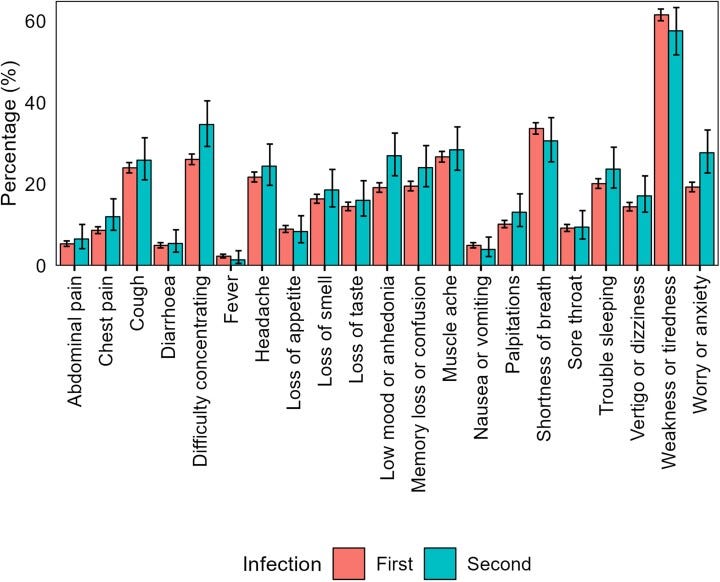
One of the most practically important findings in the recent Long COVID literature is the relationship between reinfection and risk. A community-based cohort study using UK COVID-19 Infection Survey data found that people who had been reinfected with SARS-CoV-2 had significantly higher odds of developing Long COVID compared to first infections, even after controlling for vaccination status. The increased risk from reinfection was present in adults and children alike.
The 2026 Long COVID Fact Sheet compiled by the Patient Led Research Collaborative summarises this evidence clearly: reinfection increases the risk of developing Long COVID. Each reinfection is not a neutral event. The immune system is not simply re-running its previous response. In some individuals, repeated antigen exposure appears to compound the underlying biological processes that drive post-viral illness, particularly viral persistence in tissue reservoirs, autoantibody production and mast cell sensitisation.
Number and severity of acute symptoms
A well-designed prospective US study conducted across CVS pharmacies in 2022 and validated in 2023 found that the number of acute symptoms on the day of testing was independently associated with Long COVID at six months. An increase in symptoms in the first week after testing also predicted later Long COVID. The more symptomatic the acute illness, even in non-hospitalised patients, the higher the risk of persistent symptoms.
This finding is important because it partly explains why Long COVID seems to hit some people harder despite similar initial diagnoses. The acute symptom burden appears to be a signal of the intensity of the immune and inflammatory response and the more dysregulated that initial response, the more likely it is to leave lasting biological consequences.
Allergic history
A finding that has not received as much attention as it deserves: a prospective cohort study of 807 patients found that a history of allergies was significantly more common in those who developed Long COVID compared to those who did not (31.4% versus 13.1%, p=0.022). A history of allergies reflects a baseline tendency toward mast cell-mediated immune reactivity, the same mechanism implicated in MCAS. People who are already prone to atopic or allergic responses may have an immune system that is more likely to shift into a dysregulated post-viral state following SARS-CoV-2 infection.
What protects against Long COVID
Vaccination consistently emerges as a protective factor in the literature. The 2026 autoimmune disease study found that prior vaccination mitigated Long COVID risk specifically in the highest-risk group, those with pre-existing autoimmune conditions. A history of up-to-date vaccination was also protective in the US pharmacy-based study. The protection is not absolute and vaccinated people do still develop Long COVID, but the risk is meaningfully reduced. The biological mechanism is coherent: vaccination reduces peak viral load and the duration of viraemia, limiting the viral persistence and immune dysregulation that drive post-acute sequelae.
What the evidence does not support
It is worth being explicit about what is not well supported. The early framing of Long COVID as primarily a condition of people with severe acute illness requiring hospitalisation has not held up. The vast majority of Long COVID cases occur in people who had mild acute disease and were never hospitalised. Severity of acute illness matters at the margins but it is not the primary determinant of who develops Long COVID.
The idea that Long COVID is more likely in people with pre-existing depression or anxiety has similarly not been robustly supported in properly controlled analyses. The UK household study found distinct biological and socioeconomic risk factors that were independent of psychological variables. Where psychological factors appear in the data, they are likely a consequence of Long COVID rather than a cause, or reflect shared biological mechanisms rather than a causal pathway.
The honest picture
Why do some people get Long COVID and others do not? The evidence points toward a cluster of biological vulnerabilities that predispose certain individuals to post-viral immune dysregulation: female sex, pre-existing autoimmune predisposition, allergic or atopic history, high acute symptom burden and prior reinfection. None of these factors is deterministic: plenty of people with several risk factors recover fully and some people with none develop Long COVID. But the pattern is coherent, biologically grounded and increasingly consistent across different study designs and populations.
Understanding your own risk profile is not about catastrophising future infections. It is about having accurate information, taking vaccination seriously, and recognising that Long COVID is a condition with identifiable biological determinants rather than a random or psychological one.
The views and opinions expressed in Dysautonomia Decoded are my own and do not represent those of my employer or any affiliated organisation.
References
Malakooti SK, Abboud M, Murphy JE, Singer NG, McComsey GA. Autoimmune disease is associated with heightened long COVID risk but prior immunization is protective. International Journal of Infectious Diseases. 2026;167:108540. https://doi.org/10.1016/j.ijid.2026.108540
Patient Led Research Collaborative. 2026 Long COVID Fact Sheet. https://patientresearchcovid19.com/2026-long-covid-fact-sheet-text-version/
Magnusdottir I, et al. Predictors of Long COVID among symptomatic US adults testing positive for SARS-CoV-2 at a national retail pharmacy. Open Forum Infectious Diseases. 2024. https://pmc.ncbi.nlm.nih.gov/articles/PMC11641684/
Ayoubkhani D, et al. Risk of new-onset Long COVID following reinfection with SARS-CoV-2: a community-based cohort study. Journal of the Royal Society of Medicine. 2023. https://pmc.ncbi.nlm.nih.gov/articles/PMC10633780/
Chen Y, et al. Comorbidity exposure-window definitions and multidimensional disparities in Long COVID risk. medRxiv preprint. 2026. https://doi.org/10.64898/2026.07.11.26357794
O’Mahoney LL, et al. The prevalence and long-term health effects of Long COVID among hospitalised and non-hospitalised populations: a systematic review and meta-analysis. EClinicalMedicine. 2023;55:101762.
I have all your posts in my reading list, thank you for doing all this research and sharing!
Thanks for this! I was wondering if you'd come across the paper showing that doing exercise within the first 2-8 weeks (can't remember exactly) of getting covid increased the chances of long covid? I read it a while ago and am a bit too brain foggy to hunt down again, but I thought that was really interesting as it was actionable